









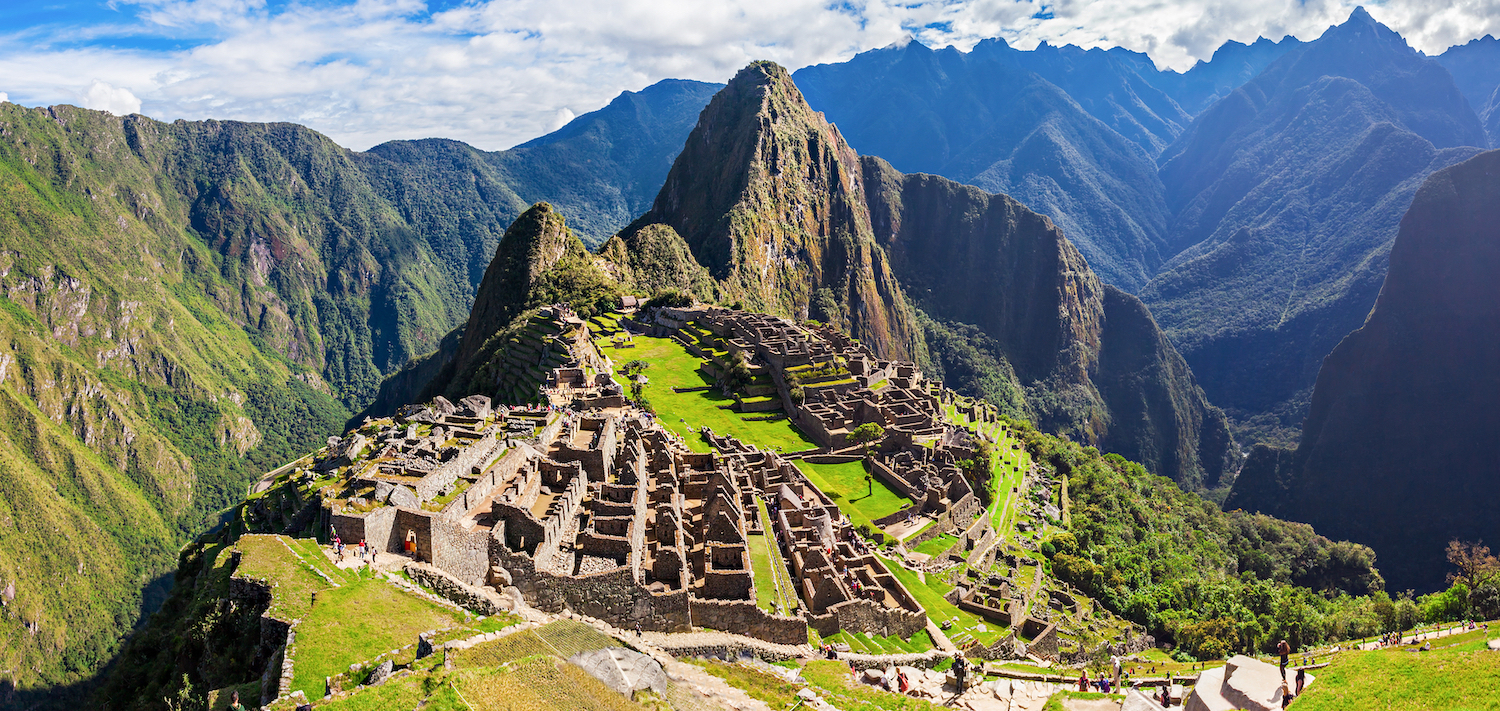
If you’re dreaming of Peru and want more than a quick look from the classic viewpoints, Nat Hab’s Machu Picchu & Sacred Valley Photo Expedition is built for travelers who want time, light and deeper context—not just a checklist moment. Machu Picchu has been photographed millions of times since it was introduced to the wider world in 1911, yet for all its visual fame, there’s still plenty most visitors don’t know about this mountaintop citadel.
So what’s true, what’s myth and what details make the site even more compelling once you’re actually there with a camera in hand? Here are a few of our favorite lesser-known facts about Machu Picchu and the Inca engineering that still surprises modern experts.
Was Machu Picchu Really the “Lost City of the Incas”?
Machu Picchu isn’t actually the “Lost City of the Incas” that Hiram Bingham claimed it to be. He was searching for another ancient city called Vilcabamba, believed to be located farther east in the Amazon Rainforest. However, Bingham linked Machu Picchu to that story when he arrived at the site.
Local residents in the region already knew about Machu Picchu, and families were living and farming nearby when Bingham visited. Rather than being “lost,” the citadel was simply remote—quietly existing above the Urubamba River valley while the world beyond the Andes changed dramatically.

How Machu Picchu Stayed Hidden After the Spanish Arrived
After the Spanish conquest began in 1532, the Inca retreated to remote strongholds, including Vilcabamba, where they resisted Spanish control for decades. Machu Picchu, however, was never discovered by the Spanish.
That single detail has shaped everything we experience today. Because it wasn’t dismantled, heavily rebuilt or absorbed into colonial development, Machu Picchu remained remarkably intact compared to many other Inca sites.
The Yale Artifact Controversy: What Was Taken From Machu Picchu?
After Bingham’s work began, his research was supported by institutions including the National Geographic Society and Yale University. During that time, a large number of artifacts were removed from Peru and transported to the United States.
In the years since, many objects have been returned to Peru, though the topic remains one of the most debated parts of Machu Picchu’s modern history. For visitors today, it’s a reminder that the story of Machu Picchu doesn’t end with archaeology—it continues through cultural stewardship and ongoing efforts to preserve Peru’s heritage.

What Does “Machu Picchu” Mean in Quechua?
The name “Machu Picchu” comes from Quechua, the Indigenous language still widely spoken in the Andes. Machu generally means “old” and picchu means “peak.” In other words, “old peak” or “ancient mountain.”
It likely refers to the mountain itself rather than the citadel. Which raises an intriguing question: what did the Inca call the city when it was inhabited?
Why Machu Picchu Is Built to Survive Earthquakes
Peru sits in one of the world’s most seismically active regions, and earthquakes have reshaped cities like Lima and Cusco throughout history. Machu Picchu was built directly over fault lines, which makes its survival even more impressive.
According to National Geographic Travel, the stones in Inca buildings were said to “dance” during earthquakes—shifting with the movement and settling back into place. That flexibility is part of what helped structures endure for centuries in a landscape that regularly shakes.
The Inca Stonework Technique That Still Stuns Engineers
Machu Picchu’s walls weren’t held together with mortar. Instead, the Inca used a method called ashlar, shaping stones so precisely they lock together tightly without binding material.
It’s one reason the masonry feels almost unreal when you see it up close: clean lines, sharp joins and stone faces fitted so tightly it’s difficult to imagine the tools and time required.
Even more striking, this dry-stone technique can be more resilient than mortar-based construction, since mortar can crack under seismic stress while tightly interlocked stones can flex.
How the Inca Built Machu Picchu Without Wheels, Iron Tools or Draft Animals
For a site that feels so technically advanced, Machu Picchu was built without technologies many of us assume are essential: no iron tools, no wheeled transport and no large draft animals used for hauling heavy stone.
Instead, workers shaped, moved and positioned stone in steep terrain using human labor, clever engineering and a deep understanding of the environment. The site also includes extensive drainage systems—an essential feature in a rainy mountain climate where landslides and erosion are constant threats.
And here’s one of the most surprising facts:
More than half of Machu Picchu’s construction is below ground, forming the foundation that stabilizes what you see above.
> Learn More: 10 Interesting Facts about Machu Picchu
What Machu Picchu Still Hasn’t Revealed Yet
Because excavation and restoration are carefully managed, Machu Picchu is still, in some ways, unfinished as a modern discovery. New findings continue to refine what we understand about daily life, spiritual practices and the purpose of the site.
For travelers, that’s part of the magic: Machu Picchu isn’t just a famous ruin—it’s an active archaeological story still being written.
Photograph Machu Picchu With Time for Light, Weather and Real Perspective
If this place has been on your mind for years, consider experiencing it in a way that goes beyond the standard rush through the viewpoints. Nat Hab’s Machu Picchu & Sacred Valley Photo Expedition is designed for photographers who want time in the field, expert guidance and multiple chances to shoot the ruins in changing conditions—plus rich cultural scenes in the Sacred Valley.
Because when you’re standing among those stone walls with the clouds lifting off the peaks, you realize quickly: Machu Picchu isn’t just something to see. It’s something to return to, frame by frame.